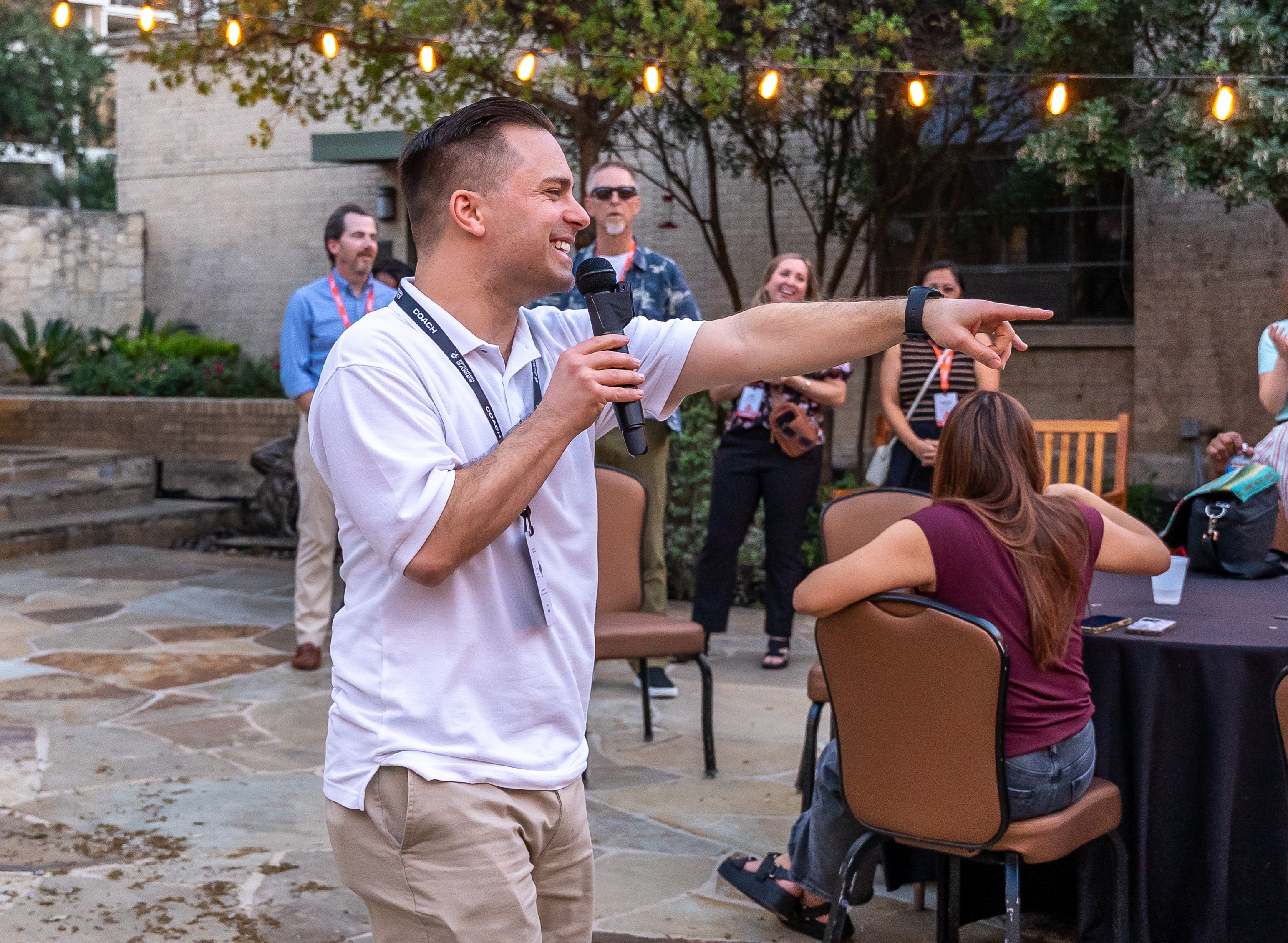





Mark Ward has worked with Ford. Pepsi. Ritz Crackers. Hannes, for nearly 15 years. Virgin Mobile.
He once drove a Ford CMax from LA to Washington DC, stopping in cities along the way to tell stories about homelessness, with Ford and Virgin Mobile as co-sponsors. He shipped three smartphones to three homeless people so they could document a day in their lives on Instagram Stories, and that campaign reached 15 million people.
This is not someone who doesn't know how to do sponsorships.
And yet, when I sat down with Mark for a coaching conversation on camera, his nonprofit, Invisible People, a media publisher with a million YouTube subscribers and a million Facebook followers, was watching its revenue go backwards. Individual donations disappearing. Philanthropy funding unpredictable. And the podcast, now 60 episodes in, still barely breaking even.
The problem wasn't that Mark couldn't land sponsors. The problem was a set of invisible constraints, in his framing, in his pitch materials, and in how he was thinking about what he was even allowed to want.
Here's what we found.
The Nonprofit Mindset Trap
The first thing I wanted to address had nothing to do with pitch decks or outreach tactics.
Mark came into the conversation saying his goal for the podcast was to "at least break even." Cover the costs. Recoup the expenses. That's it.
Here's the thing: that framing is a ceiling. And it shows up in every conversation you have with a prospective sponsor.
When you walk into a negotiation essentially asking for scraps, telling a brand you just need enough to keep the lights on, you're not positioning yourself as a partner. You're positioning yourself as a charity case. And the money that comes from that framing is charitable money. Rounding errors from a 1% philanthropic budget. Not the real marketing dollars.
More revenue, more lucrative partnerships, that's not at odds with your mission. That's what funds your mission. The goal isn't to break even on the podcast. The goal is to make real money on the podcast so you can spin those profits into the work that actually changes things.
Mark got it immediately. He said it himself back when he landed Ford: "I'm going to help you sell more cars." That's the right energy. That's the frame that opens the big doors. He just needed to flex that muscle again.
Your Pitch Deck Is Working Against You
Mark sent me two decks ahead of our conversation.
One thing I noticed immediately: pricing was listed right there on the page. A fixed rate per episode. Transparent, accountable, and completely self-limiting.
Here's why this is a problem. You have no idea what a brand actually has available to spend. Maybe Thrivant has $100K earmarked for a cause-aligned campaign this year. Maybe they have $500K. When you put a number on the page before you've had a single conversation, you've capped what's possible before it even starts. That's a cost-plus approach: here's what it costs me, here's my margin. It's the opposite of bespoke.
Take the price off. Better yet, throw the deck in the trash altogether.
Not because the information isn't valuable. It is. The audience breakdown, the past campaign examples, the mission context, all of that becomes the backbone of a custom proposal after you've had the discovery conversation. But leading with a deck is leading with yourself. The first pitch should be entirely about them.
There's another practical problem with sending PDFs: corporate firewalls block attachments from unknown senders. Your email might never arrive. If you're going to link to anything in a cold outreach, link to a social post or a YouTube video, something on a platform that won't get rejected by a spam filter.
Fish Where the Fish Are
Mark had been spending energy trying to convince brands that had no history of creator partnerships to care about homelessness. Long sales cycles. Lots of education. Occasional traction, but nothing that built momentum.
The smarter path, and this is true for anyone, not just nonprofits, is to research the brands that are already doing this.
I pulled up a creator named Zachary from MD Motivator during our conversation. He does homelessness content and has partnered with Thrivant, a financial company with a "Live Generously" mission woven into their brand identity. That single example is a roadmap.
Thrivant already believes in cause-aligned content. They already paid for it. They already saw it work. When a campaign performs, a brand doesn't quietly file it away, they start asking: who else can we find like this?
And here's what most creators don't realize: it's actually hard for brands to find the right partners. Someone who genuinely lives the mission, creates content with real craft, and won't embarrass them. That's rare. If you're Mark, you are exactly what they're looking for. They just don't know you exist yet.
So the move is simple. Build a short list of 10 brands who are already investing in cause-aligned content. Research what their initiative is actually called. What does their website say about it? What does their head of impact talk about on LinkedIn? Then reach out with a pitch that shows you've done your homework, not "here's why you should care about homelessness," but "I saw what you're building with the Live Generously mission and I want to help you amplify it."
Subject line: "Live Generously + Invisible People?"
That's a very different email than anything Mark had been sending.
Send a Video Pitch
Here's what I've been telling my clients lately, and I told Mark the same thing.
AI has made it trivially easy to write a decent-sounding cold email. Which means decision-makers' inboxes are now flooded with decent-sounding cold emails, from creators, agencies, consultants, all using the same polished-but-generic language. The pattern interrupt is gone.
A 60-second Loom video changes everything.
You share your screen, you show them the campaign they're already running, you say what you love about it, you pitch three specific things you'd love to do together, and you end with a specific ask: "Are you free Thursday at 10 AM?"
I had a creator come to me who had sent 2,000 pitches over a couple of months and gotten six responses. I told him to try one video pitch. He sent it. Got a response and a meeting that same day.
One video pitch. Same day.
The bar for standing out right now is remarkably low because everyone else is doing the same thing. Don't automate your outreach. Go fully manual, go fully specific, and go on camera.
The Two-Audience Problem
One thing that became clear in our conversation: Mark's podcast and his YouTube channel are speaking to completely different people.
YouTube: general public, people who care about the issue of homelessness, 40% watching on TV.
Podcast: nonprofit decision-makers. Middle management, upper management, mayors, politicians.
That split creates a real challenge in sponsorship conversations because a brand looking to partner with you doesn't know which audience they're buying. And "nonprofit decision-makers", while valuable, is an extremely narrow target that limits the pool of brands who'd see themselves as a fit.
My challenge to Mark: consider threading more documentary-style storytelling into the podcast, the kind of human stories that live on YouTube, so that sponsors can see a single unified audience rather than two separate ones. Not abandoning the policy-change conversations. But balancing them with the stories that make it easier for a brand to see themselves in the content.
And here's the other piece: not every video needs to carry a sponsor. Mark's most cinematic, deeply reported documentaries, like the Dallas piece on ending homelessness, probably shouldn't have a sponsor woven in. Protect the editorial integrity on those. But two out of every five pieces of content can be structured in a way that makes sponsorship natural. That's the content that funds everything else.
The Editorial Integrity Fear
Mark brought up Johnny Harris, and honestly, it's a legitimate concern.
When you let a brand into your content, you risk losing control of the story. A brand might push back on a specific angle. They might want something removed. They might not understand why journalism can't be optimized for their messaging.
Here's what I told him: that fear is real, but it's also a filter.
The right brand partners for Invisible People are the ones who will respect editorial independence from the start, not because you forced them to, but because they genuinely believe in the mission. The way to find out is to come to the very first meeting with your editorial non-negotiables written down. Here's what I will and won't do. Here's why. Here's what makes this content work.
Brands who are a bad fit will self-select out. Brands who are a genuine fit will say: "That's exactly what we want. We trust you."
If you could further your mission by getting over that fear, and finding the right partners who share your values, isn't that worth trying?
Survey Your Audience Before Anything Else
One of the most actionable things I told Mark: before he sends another pitch, he needs to know who is actually listening.
Spotify and YouTube analytics tell you age ranges and geography. They don't tell you what industry someone works in, what their role is, or what problems they're trying to solve. That's the data that makes a sponsorship pitch land.
The play is a survey campaign: one question per week on YouTube Community posts over eight weeks, plus Instagram story polls. Ask the questions that will give you the data your future sponsors need. What's your role? What's your biggest challenge in addressing homelessness in your community? What tools or resources do you wish existed?
When you can walk into a conversation with Thrivant and say "47% of our podcast audience are nonprofit directors and city officials actively working on housing policy", that's a completely different conversation than "we have 7,000 downloads an episode."
The data tells the story. Go get it.
Mark ended our conversation with a simple summary of his biggest takeaway: no pitch deck.
He'd read Sponsor Magnet twice and noticed there was nothing about pitch decks anywhere in it. That was intentional. The deck isn't the pitch. The conversation is the pitch. The deck becomes the proposal after the conversation, and it's built around what they said they care about, not what you want to show them about yourself.
Invisible People has a million YouTube subscribers. They've worked with Ford and Pepsi. They're interviewing mayors and city council members and formerly homeless people doing remarkable things. The platform is real. The mission is urgent. The money is there, it's just hiding behind a framing problem and a pitch strategy that was built for a different era.
The era is over. The playbook still works.
Want to work through your own sponsorship strategy, whether you're a nonprofit, a creator, or somewhere in between? Start with Sponsor Magnet for the full framework, or join us in Wizard's Guild for coaching on your actual deals.
What assumption have you been making about what you're "allowed" to charge, and where did that assumption come from?