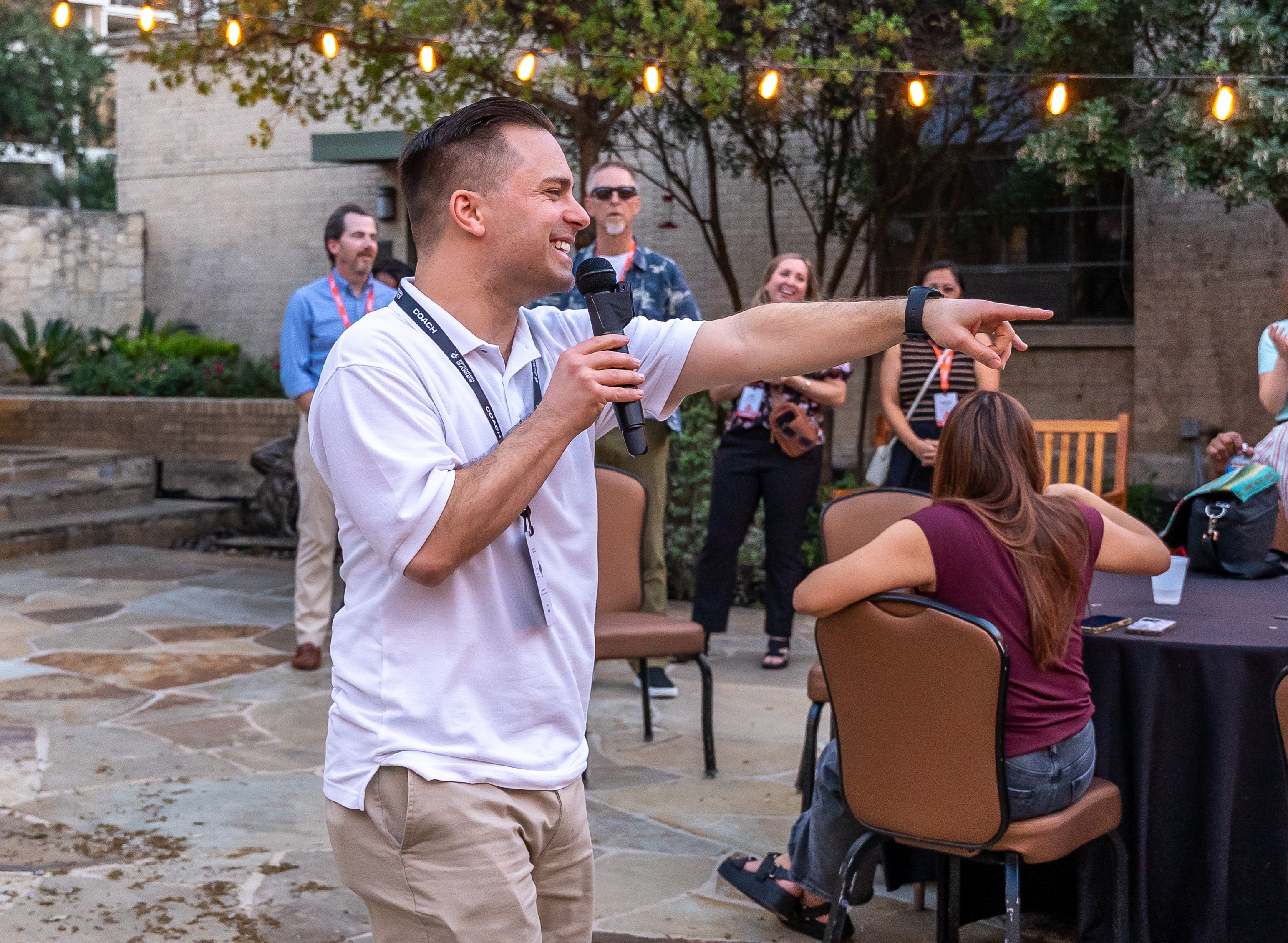





Year one of Sponsor Games, I made a lot of mistakes.
Wrong pitching strategy. Wrong pricing strategy. Activation strategy that, looking back, was pretty weak. And honestly, I was scared, scared of losing money, scared of rocking the boat with potential sponsors, scared to demand things that might cost me a deal.
Year two, I fixed most of that. And even though I still lost roughly $10,000 on the event, I'm calling it a win. Because the lessons from this year, for you, whether you run an in-person event or you're just trying to get a brand to sponsor your podcast, are worth way more than what I left on the table.
Let me break it down.
Lesson 1: Physical Presence Isn't Optional
Year one, I let some sponsors slide on the attendance requirement.
A few brands wanted to support the event but couldn't make it physically. Different country, other commitments, whatever. I was staring down the prospect of losing money, so I said fine, we'll do some email blasts for you, we'll make it work.
I regretted it immediately.
The difference between a sponsor who had someone in the room versus a sponsor who didn't was night and day. And I mean that literally. The sponsors with physical representation walked away with 20 to 30 deep relationships. Not leads. Not badge scans. Relationships. They sat next to creators at lunch, broke bread at dinner, talked shop over coffee breaks. They left feeling the value in a way that no click-through rate can replicate.
The sponsors who weren't there? Even if they technically got what the package promised, the chances of them coming back as repeat sponsors were low. Because they didn't feel it. And in sponsorship, feeling it matters.
Year two, we mandated physical presence for all main sponsors. No exceptions. We almost lost a deal over it, the brand wasn't sure they could commit to attending. It worked out. But I would have held the line even if it hadn't.
The short-term money isn't worth the long-term relationship risk. A sponsor who doesn't show up doesn't renew.
Lesson 2: Give Sponsors the Stage
This one is a little embarrassing to admit.
Sponsor Games is literally an event about sponsorships. And in year one, I was barely giving the sponsors any airtime on stage. I was the guy up there telling creators what brands think and want, while the actual brands sat quietly in the back.
If I'm honest, it was insecurity. A little fear that a sponsor might say something that contradicted my teaching, or gave advice that didn't align with my book. Classic impostor syndrome dressed up as curation.
Year two, I gave that up. The charge I gave my team: I want the brands way more involved. So we integrated them into the pitch game and the negotiate game, the two highest-leverage sessions at the entire event. When creators were practicing pitches on stage, we called the sponsors up and asked what they thought. During negotiation roleplay, we asked them directly what they actually care about this year.
The result? Haley from Kit pulled me aside and said something I want you to hear:
"I've never gotten so much stage time. People are pitching me. You're talking about Kit all day long. People are doing research on us. We're playing games about Kit. It's kind of amazing."
And then, unprompted, she told me I should be charging more.
There it is.
The more deeply you integrate a sponsor into what you're doing, the more value they feel, and the more you can charge. Brands are used to the creator who skims the brief two minutes before the ad read, mispronounces the product name, and calls it done. When you show up as a genuine partner who makes them part of the experience, you stand out immediately. And you deserve to be paid accordingly.
Lesson 3: Turn the Event Into a Place Where Brand Deals Happen
This was the biggest structural change from year one to year two, and it came from asking an obvious question I somehow hadn't asked before.
This is a brand deal conference. Why aren't there brand deals to compete for?
Year one, I was scared. I didn't know what kinds of creators would show up, so I couldn't promise a sponsor their ideal customer would be in the room. So I didn't try.
Year two, I just committed to it. When I was negotiating with sponsors from the beginning, I told them upfront: we're giving away brand deals at this event. Are you in? Most of them said yes, a little nervously, but yes.
Sixty video pitch submissions came in over 24 hours. We reviewed every one, curated the strongest applications with notes for each brand, and ran a full sponsor tank competition. R.J. from Paperform found his match in a creator named Mike and said something I've been repeating ever since:
"I couldn't do that in 24 hours online. I could do that in 24 hours here."
That sentence is the whole argument for why in-person still matters in a world where everyone has a DM inbox.
The friction I need to fix for year three: it was stressful for the brands to evaluate 60 submissions under time pressure. That's on me. Better curation, more lead time, cleaner process. But the concept? The concept works. We're already thinking about what it would look like to offer 20, 50 brand deals at a future event, something for every niche, every platform, every type of creator in the room.
Lesson 4: Throw Out the Tiered Sponsorship Package
If you've ever put together a media kit with Bronze, Silver, Gold, and Platinum tiers, you already know I'm going to tell you to put that in the trash.
The right approach is bespoke proposals built around what the specific brand is actually trying to accomplish. I've said this forever. And it still holds true even when it makes closing sponsors harder, because some brands are used to the traditional tiered approach and that's what they expect.
But here's what Matt from Lulu, our title sponsor for year two, told me after the event:
"Justin came back with a package where it was really hard to say no. It's probably better than anything I could have actually asked for. Creating those custom bespoke sponsorship packages, if you can really drill into what the sponsor needs to help achieve their business's goals for that year, there's no reason not to do that."
He's already planning to come back for year three. I know this because when I asked where to ship all their signage after the event, he said: just hold onto it.
That's not a close. That's a renewal that didn't even need a pitch.
Lesson 5: The Post-Campaign Report Is a Pitch
Most creators finish a campaign, send over analytics, and consider the job done.
I used my post-campaign report as a springboard to pitch one of my sponsors on an ongoing ambassadorship, podcast integrations, social media, LinkedIn, newsletter, the works. Six different options, all laid out clearly. I haven't closed it yet. But the point is I went to them. Because they were never going to come to me with that idea on their own. They were happy with the event. They were busy. They weren't sitting around thinking I wonder if Justin wants to do more stuff with us all year.
That's not their job. It's mine.
Don't assume a sponsor is upset after a campaign. Assume they're thrilled and busy. Then walk up to them with a proposal on a silver platter and say: here's how we keep the momentum going into Q3.
The worst they can say is not yet.
The Honest Part
I lost about $10,000 on this event.
I'm not hiding that. Event economics are real, and it takes years, five or six, by most accounts from people who've built serious events, to find real momentum. I knew that going in and I'm committed to the long haul.
But here's the thing: sponsors being genuinely integrated into Sponsor Games isn't a challenge to overcome. It's the product. This is probably the only event in the world where attendees want to hear from the sponsors, because the whole point is learning how to work with brands. That's a rare and genuinely weird thing, and I don't take it for granted.
Year two was better than year one. Year three is going to be better than year two.
And if you're running any kind of sponsorship, an event, a podcast, a newsletter, a YouTube channel, the lessons here apply directly to you. Integrate your sponsors deeply. Show up with custom proposals. Use your post-campaign report to pitch the next thing. And charge what the work actually deserves.
Screw what's normal. Strive to be abnormal.
Want help getting your sponsorship strategy right before the next big campaign? That's exactly what we do inside Wizard's Guild, real coaching on real deals, in your corner when the brand is in your inbox and you need to know what to say. And if you want the full framework, start with Sponsor Magnet.
What's one thing you've been doing in your sponsorships out of fear rather than strategy?