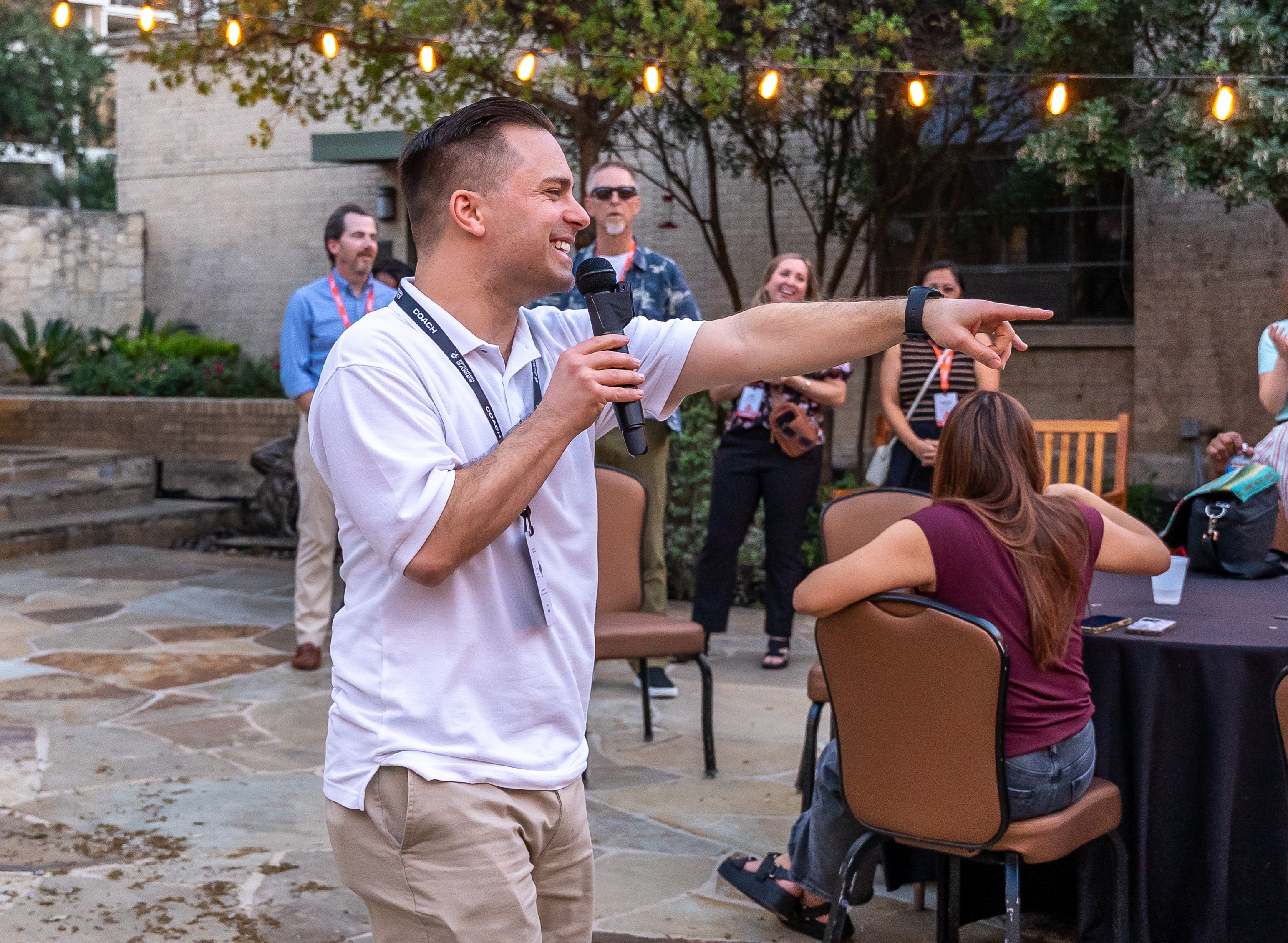





Arnov and Julian are the strategists behind Dr. Justin Sun's YouTube channel, one of the biggest educational brands in the learning niche. They manage everything: video ideas, titles, thumbnails, scripts, overall channel strategy.
And for a long time, sponsorships were a minor afterthought.
All inbound. No calls with brands. Everything negotiated through email. A lot of guesswork, no first principles, and brand deals that stayed small because nobody was really treating it like a system.
Then they 10x'd their sponsorship revenue.
Not by getting a bigger audience. Not by hiring a manager. By changing how they approached every single step of the process, from the first outreach call to the post-campaign report.
Here's exactly what shifted.
The Call Nobody Else Was Taking
Before Arnov and Julian changed anything else, they made one structural decision: they were going to get on a call with the brand before talking numbers.
Not to pitch. Not to present packages. Just to understand.
What were this brand's campaign goals? Was this an awareness play or a conversion play? What did a win actually look like to them internally? What had they tried before?
That sounds obvious. But here's what they discovered: most creators they were competing against had never done this. Brands were used to getting cold inbound pitches where a creator listed their stats and named a price. Nobody was calling to ask what the brand actually cared about first.
So when Arnov and Julian did it, the brand noticed. They'd already done deep research before the call, previous campaigns, other creators they'd worked with, the brand's mission and values. By the time they got on the phone, they could open the conversation with: "Here's what we understand you're trying to accomplish. Are we on the same page?"
The brand's response, in Arnov's words: they were "taken aback." They hadn't worked with creators who treated them that way.
That's the bar you're competing against. Most of your competition isn't doing this. Walking into a discovery call prepared, really prepared, not just having glanced at their website, is a differentiator that costs you nothing except an hour of research.
Three Packages, One Clear Choice
After the discovery call, they came back with three packages built specifically around what they'd heard the brand say they wanted.
Not a rate card. Not a Bronze/Silver/Gold menu. Three options, each designed to hit the goals the brand had described in their own words.
The brand came back within the same week. No extended back-and-forth. No prolonged negotiation. They picked a package, got internal approval, and moved forward.
Here's the thing about presenting three well-constructed options: it changes the nature of the conversation. You're no longer asking the brand to decide whether to work with you. You're asking them to decide how. That's a different decision, and it happens faster.
The First Deal Wasn't About the Money
This is the part most creators won't do, and it's exactly why it works.
Arnov and Julian made a deliberate choice: the goal of the first deal with this brand was not to maximize revenue. It was to make the brand's experience so good that the second deal, and the third, would be easy.
That meant not overpromising on results. It meant being honest upfront that YouTube is an organic platform, not an ad network. They couldn't guarantee a specific view count or ROI. What they could guarantee was that they'd put genuine thought into how to present the brand in the most favorable context possible for their specific audience.
And then they found something most creators miss: a gap in how this product had been presented on YouTube. A format that had done well in their niche, but that nobody had ever used with a product integration. They were first to market with it.
The video got 6 million views. Three days after upload, when the video was at 60–80K views, the brand emailed them: they'd already recovered 50% of their investment.
By the end, the brand had gotten a 20x ROI on their spend.
But here's what Julian said that I want you to hold onto: "This video didn't have to get 6 million views for the brand to make ROI." They had under-promised and over-delivered. The 6 million views was a bonus on top of a deal that was already working.
No Surprises. Ever.
Throughout the production process, Arnov and Julian did something most creators don't think to do: they kept the brand in the loop at every major decision point.
Video idea? Ran it by the brand. Script angle? Checked in. Packaging direction? Aligned before moving forward.
This isn't about giving the brand creative control. It's about eliminating the scenario where you finish a video and the brand says "wait, this isn't anything like what I expected." That scenario kills partnerships. It creates conflict, delays, and awkward post-mortems. It makes renewal conversations harder.
By contrast, when every checkpoint is pre-cleared, the brand feels invested in the result. They're not a passive sponsor waiting to see what they got, they're a collaborator who watched the thing come together. That feeling is what makes someone say "you're my favorite brand to work with."
Which is exactly what this brand told them on the debrief call after the first deal.
The Post-Campaign Report That Opened the Door to Everything Else
When the first campaign was done, Arnov and Julian didn't send a PDF of their analytics.
They built a full slide deck that connected every metric back to the specific goals the brand had stated before signing the contract. Not just views and clicks, but the things the brand said they cared about, proven with data.
Then they went further. They shared what they'd learned. What they'd do differently next time. What they thought had worked particularly well. And they asked the brand to give them feedback too, not just on ROI, but on what the working relationship felt like.
Two things happened as a result.
First, the brand immediately wanted to talk about a second deal, the one that 10x'd their revenue. Because the PCR wasn't a closing document, it was a brief for what comes next.
Second, the conversations didn't stop at YouTube. Both teams started talking about Instagram, Facebook, product integrations, things well beyond organic channels. The brand brought in their CEO. Dr. Justin Sun's team brought in their CEO. The conversation became about a long-term partnership across the entire business.
All of that started with a post-campaign report that went beyond the numbers.
The Mindset Shift Underneath All of This
Arnov summed it up better than I could: "Landing brand deals is not something that needs to be random and unpredictable."
That's the real shift. Not any single tactic. Not the three-package structure or the aligned PCR or the discovery call prep. All of those things matter, but they flow from one underlying belief: there is a recipe. There is a repeatable process. You don't have to guess.
Most creators — even very successful ones — are still operating on instinct. They respond to inbound, they negotiate by feel, they hope for renewals rather than engineering them. The moment you start treating sponsorships like a system rather than a lottery, everything changes.
The recipe is already there. Arnov and Julian didn't invent it from scratch, they learned it, applied it with real rigor, and now they're teaching Dr. Justin Sun's team to run it without them needing to be involved in every deal.
That's what a sponsorship business looks like when it's actually built.
Want to build the same kind of system for your channel? Sponsor Magnet is the full playbook, the same framework that Arnov and Julian used to go from guesswork to 10x. And if you want hands-on coaching as you implement it, come work with us in Wizard's Guild.
What's one part of your current brand deal process that still feels random or unpredictable, and what would it look like if it wasn't?