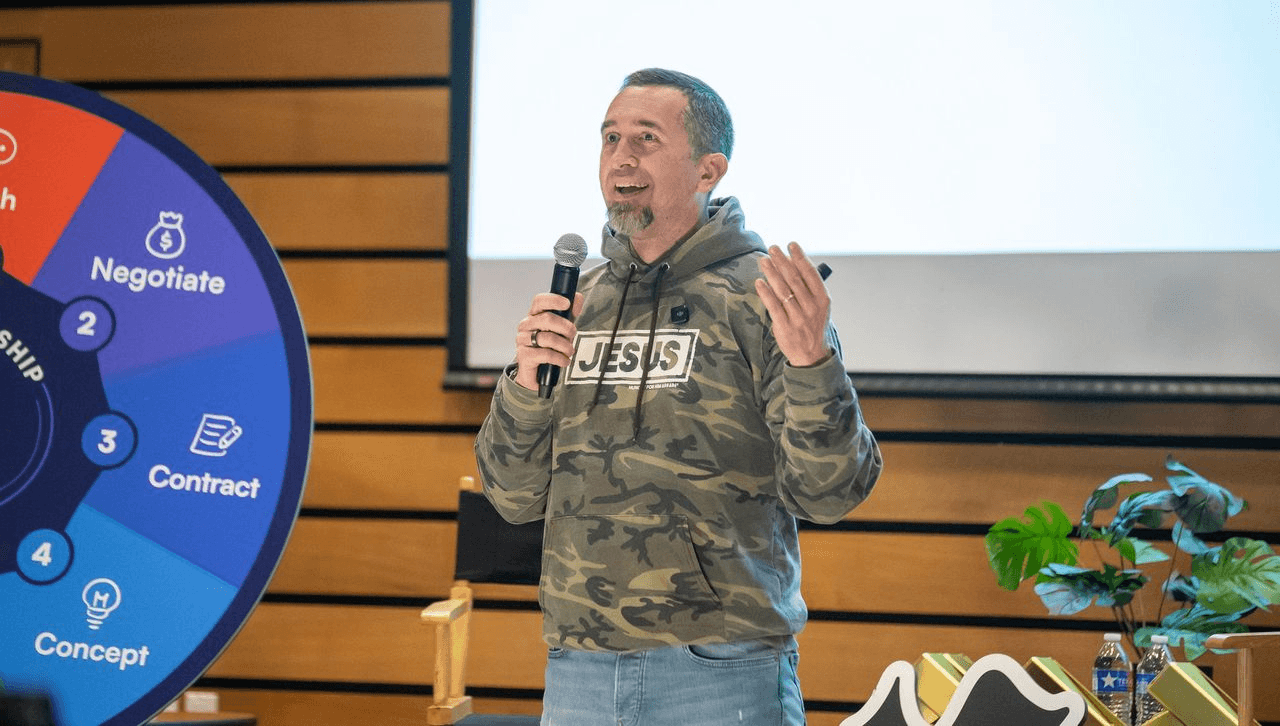


Bill Flitter
Founder of Sideline

Bill isn’t a “creator” in the traditional sense.
Not exactly an influencer.
Or, as he'd readily admit, a natural-born pitchman.
Bill is a tech founder who spent two decades in Silicon Valley. It was only after spending those two decades on the buying side of sponsorships (not the creator side) that he started Sideline, a fan engagement and loyalty platform built for youth sports tournaments.
Less than 2 weeks after sending his first cold pitch, thanks to his learnings from Creator Wizard, he had a call on the books. A few weeks after that, he closed Sideline's 1st sponsorship deal:
A flat-fee-plus-subscription partnership with a multi-location restaurant chain worth ~$10,000, which the brand chose to commit to for six months upfront. Far more than the cautious, single-tournament test Bill expected them to pick.
If you've ever talked yourself out of pitching a sponsor because you don't have a case study (or any other form of “proof” to show them yet), you’re in good company.
Bill didn't have one either, yet he closed a 5-figure deal in under a month, from a brand that had never heard of Sideline before that first cold email.
The Buyer Becomes the Seller
Bill's entire career had been on the buying side of sponsorships.
Never did he think HE would have to be the one pitching a sponsorship. So when it was his turn to pitch, 20 years of experience didn't feel like enough on its own.
He wanted a guide.
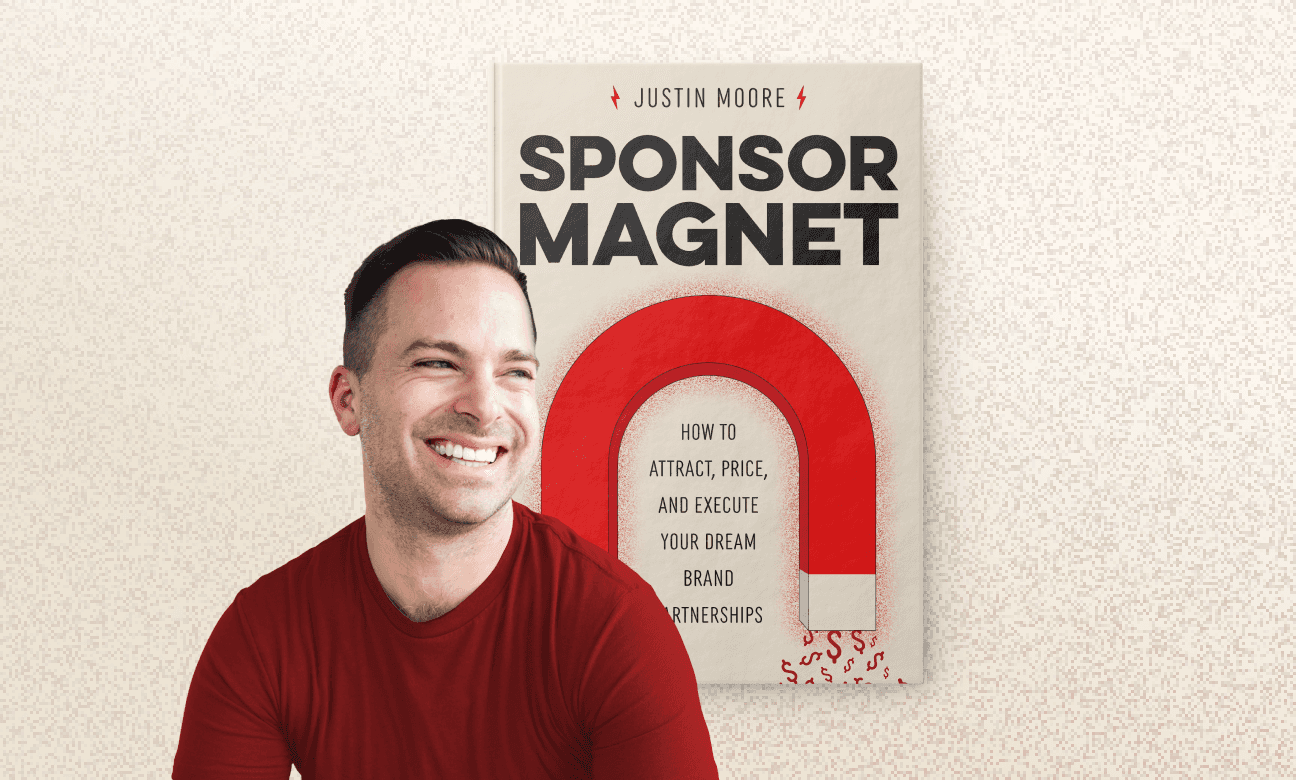
Not too long ago, Bill discovered Sponsor Magnet by Justin Moore through a podcast interview. He picked it up a few months later, and thought, "why reinvent the wheel?"

"I don't know everything. Just tell me what to do and I'll follow it. If it worked for somebody, I can follow the plan and apply it to my specific use case."
The Pitch That Started It All
Bill didn't even wait to finish the book.
He read a few chapters then started sending cold emails pulled straight from Sponsor Magnet, tailored to Sideline and the specific tournament he was trying to land sponsors for.
And man, was he in for a surprise.
"I thought, by the time they call me back, I'll have gotten through the book," he said. "But it came a lot quicker than I anticipated."
One of those prospects was a West Coast seafood chain with locations from LA to San Francisco. It took two emails for the owner to reply, and Bill had a call scheduled less than two weeks after he started outreach.
From there, he leaned all the way into Justin’s sponsorship framework:
Ask questions
Listen
Let the brand define the goal
"I played dumb, honestly," Bill said. "I never let on that I'd done this before. I just asked a lot of questions about what their goal was."
Building Credibility From Scratch
There was just one potential issue:
Sideline was brand new.
They only had one tournament running, in one location, and zero existing performance data. So with nothing to point to as proof, a pitch like Bill’s typically would be a hard sell.
"If he asked, 'Who's advertised before, what was their performance,' it was like, nobody," Bill said. "I just told him, this is brand new, we're trying something new."
But with the help of Creator Wizard, Bill didn't let his platform’s lack of “proof” stop him.
He went looking for any other kind of credibility he could offer, and found it in another corner of his life that had nothing to do with Sideline at all:
His father-in-law's restaurant (a spot he grew up watching thrive off hungry basketball families from the gym down the street). So Bill added it as a P.S. on his pitch, alongside the fact that he'd coached basketball himself for years.
And it worked!
Turns out, one restaurant owner he pitched had eaten at that exact restaurant as a kid.
"We didn't have a lot of credibility," Bill said. "But I tried to figure out what credibility can I add to these emails to get someone to respond."
An Offer More Than He Bargained For
Just like Justin Moore teaches in Sponsor Magnet, Bill put together 3 tiered options for the brand to pick from:
Short-term
Long-term
In-between
At first, Bill was expecting the "cautious" pick (the short-term, single-tournament test). Instead, the owner committed to 6 months upfront, and also added a perk Bill never even pitched:
Free kids' meals, uncapped.
"I said, 'well, how many do you want me to distribute, because normally they're going to cap that,'" Bill recalled. "And he goes, 'no, go for it.' I'm like, what do you mean go for it, there's no limit?"
On his own initiative, Bill turned a $15 meal coupon into a $20 surprise by physically attaching a $5 bill to the back of each card. The brand loved it enough that the owner sent him a stack of gift cards, unprompted, to thank the tournament reps.
How to Pitch Your First Sponsor: Advice From a 20-Year Sponsorship Buyer Turned Seller
Bill's advice for creators or founders staring down their first cold pitch comes down to 3 simple “rules”:
Follow the playbook before you trust your instincts. Success leaves clues. Justin wrote them all down in a step-by-step format based on his 15+ years of experience and $5M+ in closed deals.
Test multiple versions of your pitch and watch what gets replies. Don't assume your first draft is your best one.
Find your version of credibility, even with zero case studies. A personal story, a local connection, a past role, anything that helps a brand trust you is fair game.
Wanna see how Justin Moore and his team of expert Sponsorship Coaches can help you land a deal with zero track record and zero case studies, like Bill did? See if you qualify for a free Sponsorship Strategy Session →
How we can help you